Friday, May 10, 2013

Friday's Forgotten Book: Don Winslow's THE WINTER OF FRANKIE MACHINE


Sometimes the first book I read by an author will have been their best, making me somewhat disappointed in every other book by this author that I subsequently encounter.  Sometimes it works the other way.

You would think it logical that authors start out as amateurs and imitative and develop their craft as they age, that a natural arc would build toward a peak of their abilities.  This did not happen with F. Scott Fitzgerald and it didn't happen with the topic author of the day, Don Winslow.

Earlier this year, I did a reading survey of surfing novels and movies, which included rereads of Winslow's The Dawn Patrol (2008) and The Gentleman's Game (2009).  I read them very closely, wanting to see more, but my opinion of them did not change.  They are YA tinged, comic-book inspired, near-beer novels--Don Winslow lite.

I was taken aback once again when I got into Don Winslow's amazingly well-written thriller, The Winter of Frankie Machine (2006).  I included this book in my reading survey because I thought it might be an early version of Dawn Patrol, a surfer's detective novel.  Although the protagonist is an old surfer and lives near the beach, this turned out to be something else, and written on a much higher level.

Make no mistake, The Winter of Frankie Machine is still a genre crime thriller, and also a Mafia hitman novel.  My admiration for this tale goes against many of my long-held biases.  I spoke out against the cliche of Mafia novels before they became popular--that is, not only before the television series, The Sopranos, but long before the 1969 publication of Mario Puzo's The Godfather (which, against all my predictions, turned out to be a great novel).  Back in 1967, I had said that the Mafia stereotype was finally done after the comic cliches in John Godey's A Thrill A Minute With Jack Albany.

I was wrong.

So much of fiction depends upon the way the story is told.  Craft or magic, I can't always decide.  The Winter of Frankie Machine opens like a surfing novel, letting us get to know (and like) the protagonist, who gets his moniker from that older crime novel, Nelson Algren's The Man With The Golden Arm.  We don't learn of Frankie Machine's Mafia past until later, and we then like him enough to forgive him for being a cliche.

It is an amiable deception.

One of the cliches of crime fiction is the plot device where the hunter becomes the hunted.  Yet we know that life works exactly this way, that when we look into the abyss, it looks back at us.  Here's a bit of Frankie Machine's discussion of that:
Frank Sinatra played Frankie Machine

"A connection develops between hunter and prey.  Guys deny it as airy-fairy bullshit, Frank thought, but they all know it happens.  You track a guy long enough, you get to know him, you're living his life, one step removed, and he becomes real to you.  You try to get inside his head, think the way he thinks, and if you succeed at that, in a strange way you become him."

Another cliched plot device of the thriller, at least according to thriller author John Lescroart writing in Mystery Readers Journal, is that the corruption in the crime novel always goes up to "the highest levels of government."  Well, isn't that often the way it works in real life too?

Listen to Frankie Machine:

"Garth and the other S&L guys would get themselves saving and loan operations, make unsecured loans to themselves and their partners through shell corporations, then default on the loans and drain their S&Ls of all their assets.'

"Identical in shape to your classic Mafia bust-out, Frank thinks now, except we only managed to do it with restaurants and bars, maybe the occasional hotel.  These guys busted out the whole country to the tune of $37 billion and Congress hit up the working guy to pay for it.'

"The whole S&L house of cards eventually came tumbling down, and Garth and a few of the others did some time polishing their short games at various Club Feds, and the senators and congressmen  who had been on the boat, literally and figuratively, got on CNN to proclaim what a disgrace it all was"

"...You could take the Crips, the Bloods, the Jamaican posses, the Mafia, the Russian mob, and the Mexican cartels, and all of them put together couldn't rake in as much green in a good year as Congress does in a bad afternoon.  You could take every gang banger selling crack on every corner in American, and they couldn't generate as much ill-gotten cash as one senator rounding the back nine with a corporate CEO.'

"My father told me that you can't beat the house, and he was right.  You can't beat the White House, or the House of Representatives.  They own the game and the game is fixed, and it isn't fixed for us.'

"...the government wants to shut down organized crime?  That's hysterical.  The government is organized crime."

Tuesday, May 7, 2013

Cormac McCarthy, Folksinger: Tuesday's Forgotten or Little-known A/V

Cormac McCarthy is not an uncommon name, at least in Ireland, since the days of the historical Cormac McCarthy who was presented with the Blarney Stone by Robert the Bruce hundreds of years ago.
Cormac McCarthy, new CD: Collateral
These days, beyond the famous American author by that name, we have a less-known folk singer named Cormac McCarthy, who has New England roots and often sings of the working poor.  The songs on his newest CD (entitled Collateral) are outstanding and make a good soundtrack for Ron Rash's Nothing Gold Can Stay.

The material is sometimes literary and poetic, “the wink of a roadkill crow,” the vocal delivery is folk-blues and solid, the musical arrangements are splendid. The lyrics are not included in the liner notes, but McCarthy’s voice is strong and clear at the right volume. You hear every word.  His voice compares favorably with that of Gordon Lightfoot.

The lead piece is “Gotta Keep Movin” which conjures up some words that novelist Cormac McCarthy has written: Nothing ever stops moving. This song also has a lyric line from Satchel Paige’s six rules of life, “Don’t look back, something might be gaining.”
What’s gaining, of course, is the hound of heaven or the hound of hell--Death either way, as in Suttree.

This is reprised in what I think, first time through, is the best track on the CD, “You Can’t Outrun The Hounds,” which, with its upbeat guitar, would make a good addition to anyone’s running soundtrack.

Not that there is a bad track on this CD. As I say, the last time I listened to this man was back in the days of NAPSTER, and I wasn’t impressed then. But on this CD, the production seems highly professional, kind of a universal blue-collar sound.   I plan to listen to the whole thing several times.   Some of the tracks are noir, of lives lived in quiet desperation.
Songs:

Gotta Keep Movin'
The Working Poor
Cadilac Man
Back When I Worked on the Railroad
The Crossroads
On a Night Like This
You Can't outrun the Hounds
Walking on Solid Ground
Jailhouse Bound
Doppelganger

Here's a good link:

http://www.cormac-mccarthy.com/lyric5.html

Monday, May 6, 2013

Ron Rash, Charles E. May, Southern Gothic,

Since Firsts Magazine presented their feature on Ron Rash last September, I've been reading some of his short stories and, for the most part, I've been very pleased with them.

This week we saw Silver Linings Playbook on DVD.   Nice performances by the two leads who team up again in the movie adaptation of Ron Rash’s Serena, which has been filmed but not yet released. Due in September, I think now.

Jennifer Lawrence as a Lady MacBeth?

Serena is a modern Lady MacBeth minus the hand-washing, so it will be worth watching to see how Jennifer Lawrence plays it.   Ron Rash has a feel for the working poor, the corrupt rich, and the complicity of shared weaknesses.   Serena became his most widely known novel, but he has made a name for himself with his stories, which sometimes can be described as country/southern noir.

Professor emeritus Charles E. May, whose lifelong pursuit of excellence in the short story resulted in several fine books, discusses Ron Rash’s new collection, Nothing Gold Can Stay, at this link:

http://may-on-the-short-story.blogspot.de/2013/04/ron-rashs-nothing-gold-can-stay.html

And don’t miss fellow Cormackian Tom Conoboy’s praise of Ron Rash at these links:

http://tomconoboy.blogspot.com/2013/04/one-foot-in-eden-by-ron-rash.html

http://tomconoboy.blogspot.com/2010/07/serena-by-ron-rash.html

http://tomconoboy.blogspot.com/search/label/Ron%20Rash

NAME THE TEN BEST SHORT STORIES

Name the ten best short stories you've ever read.  It's a difficult task, like trying to name the ten best songs you've ever heard.

If you've read as many stories as I have, it can't be done.  The best you can do is to name ten best stories which are personal favorites right now, while acknowledging the fact that there are many more ambitious, acclaimed, and possibly better written stories at large.

We can't help but think of those classics we have read again and again with adjacent biographical, historical, and critical works at hand. Works like James Joyce's "The Dead," Jack London's "To Build A Fire," and Anton Chekhov's "The Lady With The Pet Dog."  We can't pick between Hemingway's "Big, Two-Hearted River" and "A Clean, Well-Lighted Place," so we'd include them both.

You might disqualify such fictional works such as Joseph Conrad's "Youth" and "Heart of Darkness" as novellas rather than long short stories.  You might disqualify such film transformations as Rod Serling's "The Monsters Are Due On Maple Street," otherwise long among my personal favorites.

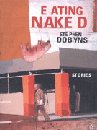
Two of my favorites are certainly not well known--but they should be.  They are Richard Russo's short story, "Horseman," which I blogged about at this link, and Stephen Dobyns' "A Happy Vacancy," the lead story in his collection entitled Eating Naked.

I've reread "Horseman" several times now, and I can see the horseman of the title in different ways.  For one thing, he is the guardian between our real selves and the selves we try to project outwardly to the world.  Or he may simply represent our real, hidden selves.  This seems to fit with the way author George Saunders and literary scholar and author Charles E. May discuss the art of the short story (see this link).

"A Happy Vacancy" starts out as a satire about an academic poet in the James Dickey mode who takes himself and his poetry far too seriously.  One day he is killed when a large pig suddenly falls out of the sky and crushes him.  The circumstances are explained, and the subsequent comic reactions of the academic community are satirized, but then the story strikes an entirely different cord and its meaning deepens.

As I say, the opening of the story is ironic, but the narrative then reveals the vacant emptiness of that very irony as the poet's widow, Harriet, emerges as the protagonist--giving the story a surprising minor key and a major lift.

Harriet's life changes.  She comes to realize that the ironic humor bantered by her husband and about her husband were both forms of judgment, as was his former seriousness:

"She thought of her husband's seriousness, how he wore it like a garment.  Most often his laughter had been ironic or sarcastic or superior.  His laughter had been judgmental and, as a result, all his laughter had been serious. . ."

She leaves the college to work in a hospice. There, she escapes her former life while working on herself.

"Seriousness, said Harriet, often exists as something we want to show other people.  We want others to think us serious, which suggests a fear of not being sufficiently respected, of not being taken seriously.  What does seriousness get us?  It neither delays our deaths nor makes them easier to bear."

A doctor at the hospice, after listening to her arguments, asks, "What is the opposite of seriousness?  Frivolity?"

"Most literally, perhaps, but I think the opposite of such a seriousness is love, because love accepts all possibilities, whereas seriousness only accepts what it sees as correct.  Perhaps I work at the hospice for purely selfish reasons.  I work to improve the quality of my love."

"That seems pretty serious," the doctor says.

"I'm not against seriousness.  I'm against the earnestness of seriousness.  I want to go beyond it.  I want seriousness to be an  element in my life and not its reason for being."

The story ends after a conversation Harriet has with one of the patients at the hospice, which evokes laughter:

"It was neither a guffaw nor the hysterical shriek of nervousness.  It was the laugh of someone whose seriousness had been overthrown, the laugh that erases every other concern."

A place beyond irony or the material illusion of ego, a happy vacancy, you might say.  A cold and a broken hallelujah maybe, but a hallelujah still.

"And doesn't this sustain us?  Doesn't it provide the strength to let us bear up our burden and continue our mortal journey?"

Wednesday, April 24, 2013

I HEAR THE SIRENS IN THE STREET by Adrian McKinty: A Review


Great news, Adrian McKinty fans.  The second Sean Duffy is out (on sale May 14th), and it is very good.  I read it as soon as I could get a copy, and like The Cold, Cold Ground, this one held me in its spell until the very end.  I hate underlining in books, but the understated humor in here had me marking sections to reread after I'd finished it.

The author grew up in Northern Ireland and lived there during the Troubles, but he is widely traveled, widely educated, and widely read. Although this novel is a police procedural with lots of witty dialogue, McKinty also gives us a narrative voice which synthesizes his worldly intellectual depth.
  
Protagonist Sean Duffy is a rather secular Catholic policeman who determinedly seeks justice, a maverick in the old sense of that much abused term, existentially threading his way toward the truth among different bureaucracies with inherent vice in their entirely different agendas. Institutional bigotry all around.

And, as anyone who has ever worked for a bureaucracy knows, you often have to circumvent the rules of the very bureaucracy you work for in order to get anything done. And so Duffy does, sometimes against his own best material interests, in order to do his job while maintaining his integrity and his sense of decency.
 
The crimes in this stellar novel occur during the regime of Margaret Thatcher and put the violence of that era in perspective. Many Americans, fuzzy on the history of Northern Ireland, can now easily identify with those who recoiled against such historical terrorism. Nobody loves Big Brother, but the mongering of fear by the killing of innocents in protest was and will always be wrong.

McKinty's humor is sometimes light comic-relief, but more often it is dark and straight-faced absurdist, reminding me of Tom Robbins in this regard. For instance:


"We turned off the Shore Road onto the Ballyharry Road. A bump chewed the New Order tape so I flipped through the radio stations. All the English ones were talking about the Falklands but Irish radio wasn't interested in Britain's colonial wars and instead were interviewing a woman who had seen an apparition of the Virgin Mary who had told her that the sale of contraceptive devices in Dublin would bring a terrible vengeance from God and his host of Angels."

This author's entertaining blog is one I check often, and his books are frequently mentioned here on my own bookblog, Little Known Gems. I suppose I should mention that I have never met the man, nor do I have any kind of a financial connection with his publishers. I simply discovered his books one day and, while awaiting his next gem, have been reading my way through his significant backlist of novels.

Adrian McKinty has yet to break out in these United States, but I look for that to happen any day now.


Tuesday, April 16, 2013

The Dude's Detective Novel Now A Movie: INHERENT VICE by Thomas Pynchon


Thomas Pynchon’s INHERENT VICE is of course being made into a movie–a Cheech and Chong movie, the director says.
Seems like a fit to me. I can’t wait to hear the music on the soundtrack.
Jeff Bridges: We miss the cheerful, peaceful counter-culture.

Of course, the main reason for reading INHERENT VICE is the wordplay:

http://ambiguities.wordpress.com/2010/06/26/the-top-ten-goofs-of-inherent-vice/

They’ve had a change of lead actors--we now have Joaquin Phoenix instead of Robert Downy--but the natural choice would have been the dude himself, Jeff Bridges, who plays himself so well in THE BIG LEBOWSKI. Watching a recent Charlie Rose interview with Bridges made that crystal-clear.
Pynchon picked out the dustjacket art for the first edition hardcover, and a good selection it is, I’d say.

You can see the story behind the dustjacket art at this link:

http://inherent-vice.pynchonwiki.com/wiki/index.php?title=Inherent_Vice_cover_analysis

I like the idea that the counter-culture back in 1969-70 was an island in which there was a certain sense of freedom not seen since. Perhaps it is true that, like Pynchon’s novel itself, it was only a pipe dream, something mythical and mystical from where we now stand, like the running argument about Lemuria and Atlantis in the novel, but there was a certain sense of freedom in the anti-establishment stance that seems timeless.

With character names like Puck and Bigfoot, it is bound to have a certain Midsummer Night’s Dream ambiance. A detective novel in an alternate state of consciousness, some say, but it seems like much more than that to me. It is timeless not because it is aimless but because it is absurdist, and there is a distinct difference between the concepts.

We have gotten beyond the pipe dream and the beach boy music, but the world continues to be as absurdist as ever.

New Books on The Searchers and Davy Crockett


The new book on The Searchers is worth reading. Alan LeMay made his novel a composite of the events in several historical western narratives–not to the nth degree of Cormac McCarthy in Blood Meridian (as documented by John Sepich’s Notes On Blood Meridian) but still LeMay went to a surprising amount of research, with solid results.

Glenn Frankel’s The Searchers: The Making of An American Legend is 400 pages or so, counting the endnotes, a nice bibliography, and an index. The author goes over the Texas history behind the novel, then discusses the history of the novel, then the making of the movie and its wide legacy. Even though I knew much of it already, it was a solid read. Recommended.

Also recommended is the new book by Bob Thompson:
Born On A Mountain Top: On The Road With Davy Crockett And The Ghosts Of The Wild Frontier. Among other things, Thompson details the controversy over the evidence of whether Crockett went down fighting at the Alamo or surrendered before he was shot.

It amazes me that it took so long to decide to authenticate the de la Pena manuscript and then so little time to do it. It reminds me of the delay in authenticating Samuel Chamberlain’s My Confession, which would be so easy to do, but which now probably will not be accomplished during my lifetime. Or so it seems.

Thompson throws the evidence in the de la Pena manuscript out anyway in his assessment, not on the basis of historical authenticity, but because he is cynical about the then contemporary hype surrounding Davy Crockett and the Alamo.
And of course, if the Chamberlain manuscript is proven authentic, it doesn’t mean that the man always told the truth, nor does it prove the existence of Judge Holden by that name. Still, enquiring minds want to know.

Walt Disney’s Davy Crockett was an amazing work. It featured a very unconventional opening, especially for the 1950s. Crockett is not seen until he is thrown out of the bush by an angry bear, who, he says, he had been trying to grin to death. We know right then that this is the history of the legend that we are seeing, not the actual history of the man, and we also know then that there will be comic relief along the way.

But what is most impressive is that Crockett resists Andrew Jackson’s toady bureaucrat, and that he goes home to see about his family even when Andrew Jackson tries to extend the service of Crockett’s company for the duration of the war. Here we have a striking civil disobedience lesson, and a lesson in the evils of bureaucracy that no doubt lingered in many of the minds of those who first saw it way back when.