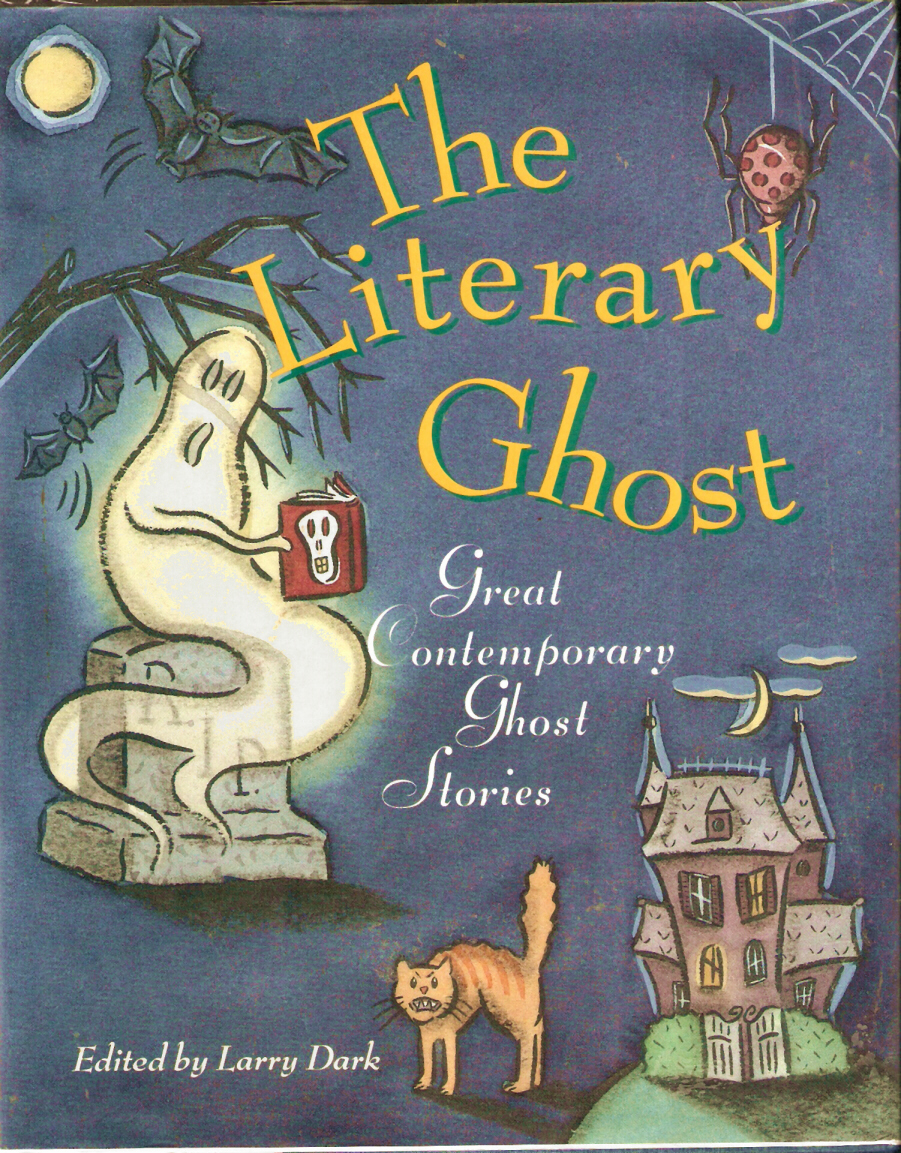
Fat chance of that happening. But there are many among us who want their cake without ice cream, their scotch without soda, and their mysteries without haints.
Many avid readers of Ed McBain expressed dismay whenever the author wandered into the twilight zone, as in his novel Ghosts--which was meant as a sort of a Christmas gift to his readers. I recall one reader who swore off McBain after reading it, who demanded some kind of warning label on any novels touched by the ecoplastic fingers of the surreal, like a red S on the spine of the book.
Over at author Declan Burke's excellent blog the other day, he wrote upon this regarding the novels of John Connolly:
"...John Connolly has refined the supernatural aspect of his earlier Charlie Parker novels, so that he’s now using the gothic tropes to go after a far more profound effect.  There’s a scene in THE BURNING SOUL in which Charlie Parker comes downstairs in the middle of the night to find his TV on, cartoons playing, this in the midst of pursuing a case in which a young girl has been abducted. It’s a chilling piece of writing, certainly, but what it suggested to me was that Connolly wasn’t simply invoking ghosts and suchlike, but going after a far more subtle quality, attempting - successfully, in my opinion - to verbalise a sense of otherworldliness that is neither supernatural nor religious, although you could argue that it has a spiritual dimension."

Fall is here, the tag end of our year, the equivalent to the sunset of our day. On the album scanned above, Dinah Washington sings of it in a voice that is ethereal and timeless:
This bitter earth
can be so cold.
Today we're young,
too soon we're old.
I like those other September songs too, such as the Kurt Weill composition most often heard in the voices of elderly men such as Willie Nelson or Jimmy Durante. Tex Ritter with Stan Kenton's strings behind him. The aging Frank Sinatra.
Oh it's a long, long while, from May to December
But the days grow short, when you reach September.
When the autumn weather turns the leaves to flame,
One hasn't got time for the waiting game.
Oh, the days dwindle down
to a precious few:
September. . .
November. . .
And these few precious days I'll spend with you.
These precious days I'll spend with you.
Metaphorically, fall is the conclusion of our lives, the diminishing of our powers, the dying of the light. This metaphor is everywhere in the human universals of classic literature, sunset and autumn, the fall. William Faulkner put the title Twilight on his greatest work, but he later changed it to The Sound and the Fury with a nod to that traditional fall tale, Shakespeare's MacBeth. Cormac McCarthy's subtitle for Blood Meridian was The Evening Redness in the West, which of course is twilight or sunset.
We hate to see that evening sun go down.
Death is at the end of the fall, as we are each personally kicked out of paradise, in a metaphorical relationship to biblical and other mythic lore. Legends of the Fall. The fall starts in September and ends in December--just before Christmas as it has evolved now. Poe was writing about this in "The Raven," to those with ears to hear it:
Ah, distinctly I remember it was in the bleak December
And each separate dying ember wrought its ghost upon the floor.
In this country, it is the holiday season. First there is Halloween, the death before rebirth, the nightmare before Christmas. Halloween is our day of the dead, our celebration of that which we constantly deny. That is, we live in denial of our pending personal death yet in the constant logical certainty of it. It is the fear of death and its simultaneous denial which drives western material civilization, causes our wars, and inspires our greatest Art.
All night sheetlightening quaked sourceless to the west beyond the midnight thunderheads, making a blueish day of the distant desert, the mountains on the sudden skyline stark and black and livid like a land of some other order out there whose true geology was not stone but fear."
--Cormac McCarthy, Blood Meridian
Not stone but fear. And what are we afraid of? Lots of things, and we give them names such as the Red Threat or Weapons of Mass Destruction, but all of them, imaginary or real, are but projected substitutes for what lies at the end of them: Death itself, the Sunset Express, and the unknown void beyond.
In this country, betwixt Halloween and Christmas, we are blessed with another wonderful holiday, Thanksgiving. That note of love and hope at the end of Dinah Washington's This Bitter Earth, the end stanza of Kurt Weill's September Song quoted above--these belong to that spirit of gratitude connected with Thanksgiving. I've much to say about this in relation to certain books, and I hope some readers will stick around for that.
In the meantime, I'm going to begin daily reviews of books, movies, and songs which speak of the seasonal spookiness and death, such as Adrian McKinty's Dead trilogy, John Connolly's Every Dead Thing, David J. Skal's Death Makes a Holiday, and many others.
Happy Fall, Y'all!
One of my favorite blogs is that of Emerald Noir author Declan Burke, and this last week he discussed an Edward Docx newspaper article, which essentially replied to author Lee Childs' trashing of literary novels. The link to that article is here and the link to Burke's discussion of it is here. Burke is the author of Crime Always Pays , The Big O,
  Eight-Ball Boogie
 , and other crime novels yet to be published.
The comment section of that blog drew several novelists including Dr. John Connolly, author of, among many others, Every Dead Thing and Nocturnes, two of my favorite reads of the past year.
 I sent for his other works too, and they are on my to-be-read shelves now for the upcoming year.
We know that crime novels often rise above genre, offering social criticism and insights into the human condition, while maintaining that tension that comes with the thriller/detective novel format that makes them genre. Whenever the best novels of the last century are listed, Raymond Chandler, Dashiell Hammett, and other elite genre novelists with staying power have always gotten their due while lower quality and fadish best-sellers, whether literary novels or genre, have fallen by the wayside.
Which brings me to the book in front of me, a seasonal read, Martha Grimes' Jerusalem Inn (Richard Jury Mystery). This is certainly a genre novel, one of her long-running series published more than a quarter of a century ago back in 1984. I love the way this book opens, the cinematic feel of it, the images which invite interpretation:
"A meeting in a graveyard. That was how it would always come back to him, and without any sense of irony at all - that a meeting in a graveyard did not foreshadow the permanence he was after. Snow mounding the sundial. Sparrows quarreling in the hedges. The black cat sitting enthroned in the dry birdbath. Slivers of memories. A broken mirror. Bad luck, Jury.
"It was on a windy December day, with only five of them left until Christmas, that Jury saw the sparrows quarreling in a nearby hedge as he stood looking through the gates of Washington Old Hall. The sparrows--one attempting to escape, the other in hot pursuit--flew from hedge to tree to hedge. The pecking of one had bloodied the breast of the other. He was used to scenes of carnage; still he was shocked. But didn't it go on everywhere? He tracked their flight from tree to hedge and finally to the ground at his feet. He moved to break up the fight, but they were off again, off and away.
"The place was closed, so he trudges about the old village of Washington in the snow now turning to rain. After three o'clock, so the pubs were closed, worse luck. Up one village lane, he found himself outside the Catholic church. Feeling sorry for yourself, Jury? No kith, no kin, no wife, no . . . Well, but it is Christmas, his kinder self answered.
"This depressing debate with himself continued, like the fighting sparrows, as he heaved upon the heavy door of the church, walked quietly into the vestibule, only to find he'd interrupted a christening in the nave. The priest still intoned but the faces of the baby's parents turned toward the intruder and the baby cried.
"His nasty sparrow self cackled. You nit. Jury pretended to be in a brown study before the church bulletin board, as if it were important to convey to the people down there that the information posted here was absolutely necessary for his salvation. Nodding curtly (as if they care, you clod!) at nothing, he turned and left. Unborn again.
"That sparrow self was with him in the church cemetery, sitting on his shoulder, pecking his ear to a bloody pulp, telling him that no one had forced him to accept his cousin's whining invitation to come to them at Christmas ("But we never see you, Richard. . ."). Newcastle-upon-Tyne. What a bloody awful place in the winter. A nice walk among the gravestones, that's what you need, Jury. And in the snow, too. Peck, peck, peck, peck.
That was when he saw her."
______
His meeting with the woman in the graveyard is then beautifully described. They talk casually for a long while, and she invites him for a drink at her place, which is nearby. Grimes gives this an entirely natural feel as her characters become genuinely interested in each other, each with the growing prospect of a surprisingly wonderful holiday ahead of them. The reader is rooting for them to get together, and indeed it looks as if they will. But then the last sentence of the first chapter is,
"The next time he saw her she was dead."
Well, what did you expect? This is genre fiction. It follows a formula. The perpetual loner, Richard Jury, now has personal reasons for investigating the case, even though he is away on vacation. We know the theme, but each genre novelist gives us a different variation upon it, and hopefully a creative one.


 There’s a scene in THE BURNING SOUL in which Charlie Parker comes downstairs in the middle of the night to find his TV on, cartoons playing, this in the midst of pursuing a case in which a young girl has been abducted. It’s a chilling piece of writing, certainly, but what it suggested to me was that Connolly wasn’t simply invoking ghosts and suchlike, but going after a far more subtle quality, attempting - successfully, in my opinion - to verbalise a sense of otherworldliness that is neither supernatural nor religious, although you could argue that it has a spiritual dimension."