Great news, Adrian McKinty fans. The second Sean Duffy is out (on sale May 14th), and it is very good. I read it as soon as I could get a copy, and like The Cold, Cold Ground, this one held me in its spell until the very end. I hate underlining in books, but the understated humor in here had me marking sections to reread after I'd finished it.
The author grew up in Northern Ireland and lived there during the Troubles, but he is widely traveled, widely educated, and widely read. Although this novel is a police procedural with lots of witty dialogue, McKinty also gives us a narrative voice which synthesizes his worldly intellectual depth.
Protagonist Sean Duffy is a rather secular Catholic policeman who determinedly seeks justice, a maverick in the old sense of that much abused term, existentially threading his way toward the truth among different bureaucracies with inherent vice in their entirely different agendas. Institutional bigotry all around.
And, as anyone who has ever worked for a bureaucracy knows, you often have to circumvent the rules of the very bureaucracy you work for in order to get anything done. And so Duffy does, sometimes against his own best material interests, in order to do his job while maintaining his integrity and his sense of decency.
The crimes in this stellar novel occur during the regime of Margaret Thatcher and put the violence of that era in perspective. Many Americans, fuzzy on the history of Northern Ireland, can now easily identify with those who recoiled against such historical terrorism. Nobody loves Big Brother, but the mongering of fear by the killing of innocents in protest was and will always be wrong.
McKinty's humor is sometimes light comic-relief, but more often it is dark and straight-faced absurdist, reminding me of Tom Robbins in this regard. For instance:
"We
turned off the Shore Road onto the Ballyharry Road. A bump chewed the New Order
tape so I flipped through the radio stations. All the English ones were talking
about the Falklands but Irish radio wasn't interested in Britain's colonial wars
and instead were interviewing a woman who had seen an apparition of the Virgin
Mary who had told her that the sale of contraceptive devices in Dublin would
bring a terrible vengeance from God and his host of Angels."
This author's entertaining blog is one I check often, and his books are frequently mentioned here on my own bookblog, Little Known Gems. I suppose I should mention that I have never met the man, nor do I have any kind of a financial connection with his publishers. I simply discovered his books one day and, while awaiting his next gem, have been reading my way through his significant backlist of novels.
Adrian McKinty has yet to break out in these United States, but I look for that to happen any day now.
Wednesday, April 24, 2013
Tuesday, April 16, 2013
The Dude's Detective Novel Now A Movie: INHERENT VICE by Thomas Pynchon
Thomas Pynchon’s INHERENT VICE is of course being made into a movie–a Cheech and Chong movie, the director says.
Seems like a fit to me. I can’t wait to hear the music on the soundtrack.
![]() |
| Jeff Bridges: We miss the cheerful, peaceful counter-culture. |
Of course, the main reason for reading INHERENT VICE is the wordplay:
http://ambiguities.wordpress.com/2010/06/26/the-top-ten-goofs-of-inherent-vice/
They’ve had a change of lead actors--we now have Joaquin Phoenix instead of Robert Downy--but the natural choice would have been the dude himself, Jeff Bridges, who plays himself so well in THE BIG LEBOWSKI. Watching a recent Charlie Rose interview with Bridges made that crystal-clear.
Pynchon picked out the dustjacket art for the first edition hardcover, and a good selection it is, I’d say.
You can see the story behind the dustjacket art at this link:
http://inherent-vice.pynchonwiki.com/wiki/index.php?title=Inherent_Vice_cover_analysis
I like the idea that the counter-culture back in 1969-70 was an island in which there was a certain sense of freedom not seen since. Perhaps it is true that, like Pynchon’s novel itself, it was only a pipe dream, something mythical and mystical from where we now stand, like the running argument about Lemuria and Atlantis in the novel, but there was a certain sense of freedom in the anti-establishment stance that seems timeless.
With character names like Puck and Bigfoot, it is bound to have a certain Midsummer Night’s Dream ambiance. A detective novel in an alternate state of consciousness, some say, but it seems like much more than that to me. It is timeless not because it is aimless but because it is absurdist, and there is a distinct difference between the concepts.
We have gotten beyond the pipe dream and the beach boy music, but the world continues to be as absurdist as ever.
New Books on The Searchers and Davy Crockett
The new book on The Searchers is worth reading. Alan LeMay made his novel a composite of the events in several historical western narratives–not to the nth degree of Cormac McCarthy in Blood Meridian (as documented by John Sepich’s Notes On Blood Meridian) but still LeMay went to a surprising amount of research, with solid results.
Glenn Frankel’s The Searchers: The Making of An American Legend is 400 pages or so, counting the endnotes, a nice bibliography, and an index. The author goes over the Texas history behind the novel, then discusses the history of the novel, then the making of the movie and its wide legacy. Even though I knew much of it already, it was a solid read. Recommended.
Also recommended is the new book by Bob Thompson:
Born On A Mountain Top: On The Road With Davy Crockett And The Ghosts Of The Wild Frontier. Among other things, Thompson details the controversy over the evidence of whether Crockett went down fighting at the Alamo or surrendered before he was shot.
It amazes me that it took so long to decide to authenticate the de la Pena manuscript and then so little time to do it. It reminds me of the delay in authenticating Samuel Chamberlain’s My Confession, which would be so easy to do, but which now probably will not be accomplished during my lifetime. Or so it seems.
Thompson throws the evidence in the de la Pena manuscript out anyway in his assessment, not on the basis of historical authenticity, but because he is cynical about the then contemporary hype surrounding Davy Crockett and the Alamo.
And of course, if the Chamberlain manuscript is proven authentic, it doesn’t mean that the man always told the truth, nor does it prove the existence of Judge Holden by that name. Still, enquiring minds want to know.
Walt Disney’s Davy Crockett was an amazing work. It featured a very unconventional opening, especially for the 1950s. Crockett is not seen until he is thrown out of the bush by an angry bear, who, he says, he had been trying to grin to death. We know right then that this is the history of the legend that we are seeing, not the actual history of the man, and we also know then that there will be comic relief along the way.
But what is most impressive is that Crockett resists Andrew Jackson’s toady bureaucrat, and that he goes home to see about his family even when Andrew Jackson tries to extend the service of Crockett’s company for the duration of the war. Here we have a striking civil disobedience lesson, and a lesson in the evils of bureaucracy that no doubt lingered in many of the minds of those who first saw it way back when.
Wednesday, March 27, 2013
Reading In the Doctor's Waiting Room
The hardest reading we do, or try to do, is in the waiting rooms of doctors and hospitals, when the health of our loved ones may be on the line.

Most harrowing is reading about the way our medical system is geared by the big corporations to expand their profits by neglecting the actual care of patients. It isn't criminal because it's legal, but it symbolic of our national materialistic corruption that it is legal. Rush Limbaugh and his dittoheads insist that we have the best medical care system in the world, but that just isn't so.
We realize that this isn't so when we look at how our loved ones are being treated, when it then becomes personal.
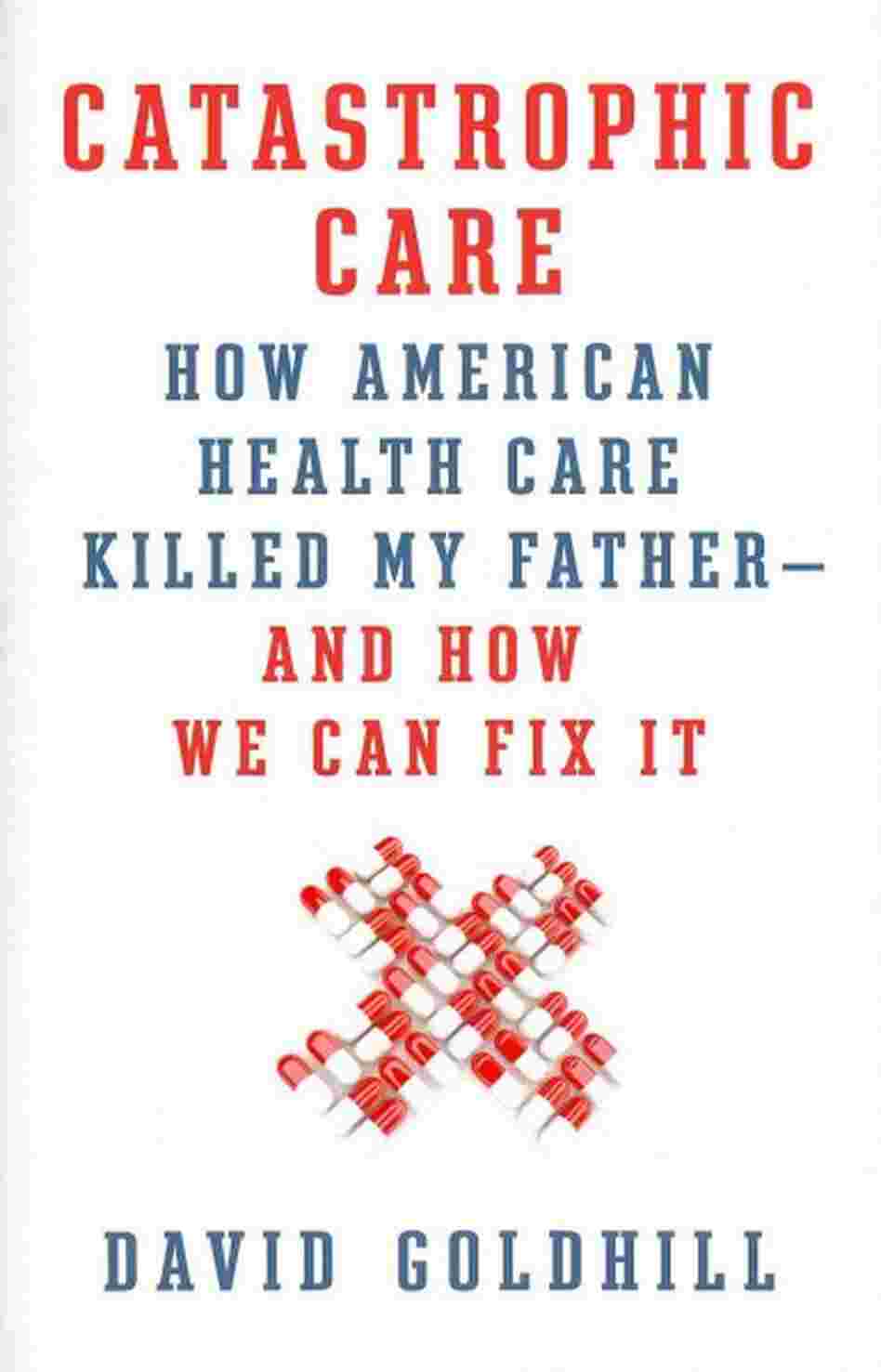
"I started thinking about health care because of a personal tragedy: almost five years ago, my father died from a hospital-borne infection he acquired in the intensive care unit of a well-regarded New York hospital. . .But although his death was a deeply personal and unique tragedy for me and my family, my dad was merely one of a hundred thousand Americans who died that year as a result of infections picked up in hospitals.'
"One hundred thousand preventable deaths. That's more than double the annual number of people killed in car crashes, five times the number murdered, twenty 9/11s. Each and every year."
--David Goldhill, Catastrophic Care: How American Health Care Killed My Father--And How We Can Fix It.

Most harrowing is reading about the way our medical system is geared by the big corporations to expand their profits by neglecting the actual care of patients. It isn't criminal because it's legal, but it symbolic of our national materialistic corruption that it is legal. Rush Limbaugh and his dittoheads insist that we have the best medical care system in the world, but that just isn't so.
We realize that this isn't so when we look at how our loved ones are being treated, when it then becomes personal.
"I started thinking about health care because of a personal tragedy: almost five years ago, my father died from a hospital-borne infection he acquired in the intensive care unit of a well-regarded New York hospital. . .But although his death was a deeply personal and unique tragedy for me and my family, my dad was merely one of a hundred thousand Americans who died that year as a result of infections picked up in hospitals.'
"One hundred thousand preventable deaths. That's more than double the annual number of people killed in car crashes, five times the number murdered, twenty 9/11s. Each and every year."
--David Goldhill, Catastrophic Care: How American Health Care Killed My Father--And How We Can Fix It.
Monday, March 11, 2013
An Analysis: Gone Girl by Gillian Flynn
Walker Percy's novel, The Moviegoer, which won the National Book Award back in 1961, made the observation that people were becoming less authentic:
“Other people, so I have read, treasure memorable moments in their lives: the time one climbed the Parthenon at sunrise, the summer night one met a lonely girl in Central Park and achieved with her a sweet and natural relationship, as they say in books. I too once met a girl in Central Park, but it is not much to remember. What I remember is the time John Wayne killed three men with a carbine as he was falling to the dusty street in Stagecoach, and the time the kitten found Orson Welles in the doorway in The Third Man.”
Fifty-some years later, this idea is reprised in the runaway best-seller, Gone Girl by Gillian Flynn, in the following quote:
"We were the first human beings who would never see anything for the first time. We stare at the wonders of the world, dull-eyed, underwhelmed, Mona Lisa, the Pyramids, the Empire State Building. Jungle animals on attack, ancient icebergs collapsing, volcanoes erupting. I can't recall a single amazing thing I have seen firsthand that I didn't immediately reference to a movie or TV show. A fucking commercial. . .'
"I've literally seen it all, and the worst thing is that the secondhand experience is always better. The image is crisper, the view is keener, the camera angle and the soundtrack manipulate my emotions in a way reality can't anymore. I don't know that we are actually human at this point, those of us who are like most of us, who grew up with TV and movies and now the Internet. If we are betrayed, we know the words to say; when a loved one dies, we know the words to say. If we want to play the stud or the smart-ass or the fool, we know the words to say. We are all working from the same dog-eared script.'
"It's a very difficult era in which to be a person, just a real, actual person, instead of a collection personality traits selected from an endless Automat of characters."
Walker Percy's The Moviegoer is a very good book. I'd like to say that Gone Girl is an equally good book, but it falls far short of that. It is an overly-hyped revenge thriller which relies upon the unreliable narrator, sharply written but flawed, lacking a credible and clear distinction between the psychopathic and the normally empathetic and compassionate. The two protagonists are both insufferable psychopaths.
If they were consistent psychopaths, I might not complain as much. But the woman who turns out to be a manipulative control freak somehow has no problem giving the last of her $80,000 family trust to her then-alienated husband to open a bar with his twin sister, whom she never liked. This woman obsessively revenges those who have wronged her, yet there is no talk of revenge against the seedy couple who steal all of her money and leave her stranded. Those are the most obvious errors and they will doubtlessly fix them in the upcoming Reese Witherspoon movie. Unlike life, fiction has to make sense.
There are other glaring flaws and inconsistencies. For openers, the title, Gone Girl, has an absolutely false ring to it considering all the talk about gender issues in here. Girl is an inappropriate title for a woman in her thirties unless it is meant playfully or ironically--and if that is the case, then The Cool Girl would have been a more aptly ironic title, since the protagonist defines one of her pretended personalities as such:
“That night at the Brooklyn party, I was playing the girl who was in style, the girl a man like Nick wants: the Cool Girl. Men always say that as the defining compliment, don't they? She's a cool girl. Being the Cool Girl means I am a hot, brilliant, funny woman who adores football, poker, dirty jokes, and burping, who plays video games, drinks cheap beer, loves threesomes and anal sex, and jams hot dogs and hamburgers into her mouth like she's hosting the world's biggest culinary gang bang while somehow maintaining a size 2, because Cool Girls are above all hot.”
"Hot and understanding. Cool Girls never get angry; they only smile in a chagrined, loving manner and let their men do whatever they want. Go ahead, shit on me, I don’t mind, I’m the Cool Girl.
Men actually think this girl exists. Maybe they’re fooled because so many women are willing to pretend to be this girl. For a long time Cool Girl offended me. I used to see men – friends, coworkers, strangers – giddy over these awful pretender women, and I’d want to sit these men down and calmly say: You are not dating a woman, you are dating a woman who has watched too many movies written by socially awkward men who’d like to believe that this kind of woman exists and might kiss them."
There is a lot of talk in here about women in the tabloid media, cartoonish plays upon Oprah-like TV hosts, Court TV, and such. Gone Girl is at best a B satire which will probably make a mediocre B movie, despite the talents of Reese Witherspoon. Too bad they couldn't find a young Liza Minnelli to play the part:
“I feel myself trying to be charming, and then I realize I’m obviously trying to be charming, and then I try to be even more charming to make up for the fake charm, and then I’ve basically turned into Liza Minnelli: I’m dancing in tights and sequins, begging you to love me. There’s a bowler and jazz hands and lots of teeth.”
― Gillian Flynn, Gone Girl
“Other people, so I have read, treasure memorable moments in their lives: the time one climbed the Parthenon at sunrise, the summer night one met a lonely girl in Central Park and achieved with her a sweet and natural relationship, as they say in books. I too once met a girl in Central Park, but it is not much to remember. What I remember is the time John Wayne killed three men with a carbine as he was falling to the dusty street in Stagecoach, and the time the kitten found Orson Welles in the doorway in The Third Man.”
Fifty-some years later, this idea is reprised in the runaway best-seller, Gone Girl by Gillian Flynn, in the following quote:
"We were the first human beings who would never see anything for the first time. We stare at the wonders of the world, dull-eyed, underwhelmed, Mona Lisa, the Pyramids, the Empire State Building. Jungle animals on attack, ancient icebergs collapsing, volcanoes erupting. I can't recall a single amazing thing I have seen firsthand that I didn't immediately reference to a movie or TV show. A fucking commercial. . .'
"I've literally seen it all, and the worst thing is that the secondhand experience is always better. The image is crisper, the view is keener, the camera angle and the soundtrack manipulate my emotions in a way reality can't anymore. I don't know that we are actually human at this point, those of us who are like most of us, who grew up with TV and movies and now the Internet. If we are betrayed, we know the words to say; when a loved one dies, we know the words to say. If we want to play the stud or the smart-ass or the fool, we know the words to say. We are all working from the same dog-eared script.'
"It's a very difficult era in which to be a person, just a real, actual person, instead of a collection personality traits selected from an endless Automat of characters."
Walker Percy's The Moviegoer is a very good book. I'd like to say that Gone Girl is an equally good book, but it falls far short of that. It is an overly-hyped revenge thriller which relies upon the unreliable narrator, sharply written but flawed, lacking a credible and clear distinction between the psychopathic and the normally empathetic and compassionate. The two protagonists are both insufferable psychopaths.
If they were consistent psychopaths, I might not complain as much. But the woman who turns out to be a manipulative control freak somehow has no problem giving the last of her $80,000 family trust to her then-alienated husband to open a bar with his twin sister, whom she never liked. This woman obsessively revenges those who have wronged her, yet there is no talk of revenge against the seedy couple who steal all of her money and leave her stranded. Those are the most obvious errors and they will doubtlessly fix them in the upcoming Reese Witherspoon movie. Unlike life, fiction has to make sense.
![]() |
| Gillian Flynn and Reese Witherspoon |
There are other glaring flaws and inconsistencies. For openers, the title, Gone Girl, has an absolutely false ring to it considering all the talk about gender issues in here. Girl is an inappropriate title for a woman in her thirties unless it is meant playfully or ironically--and if that is the case, then The Cool Girl would have been a more aptly ironic title, since the protagonist defines one of her pretended personalities as such:
“That night at the Brooklyn party, I was playing the girl who was in style, the girl a man like Nick wants: the Cool Girl. Men always say that as the defining compliment, don't they? She's a cool girl. Being the Cool Girl means I am a hot, brilliant, funny woman who adores football, poker, dirty jokes, and burping, who plays video games, drinks cheap beer, loves threesomes and anal sex, and jams hot dogs and hamburgers into her mouth like she's hosting the world's biggest culinary gang bang while somehow maintaining a size 2, because Cool Girls are above all hot.”
"Hot and understanding. Cool Girls never get angry; they only smile in a chagrined, loving manner and let their men do whatever they want. Go ahead, shit on me, I don’t mind, I’m the Cool Girl.
Men actually think this girl exists. Maybe they’re fooled because so many women are willing to pretend to be this girl. For a long time Cool Girl offended me. I used to see men – friends, coworkers, strangers – giddy over these awful pretender women, and I’d want to sit these men down and calmly say: You are not dating a woman, you are dating a woman who has watched too many movies written by socially awkward men who’d like to believe that this kind of woman exists and might kiss them."
There is a lot of talk in here about women in the tabloid media, cartoonish plays upon Oprah-like TV hosts, Court TV, and such. Gone Girl is at best a B satire which will probably make a mediocre B movie, despite the talents of Reese Witherspoon. Too bad they couldn't find a young Liza Minnelli to play the part:
“I feel myself trying to be charming, and then I realize I’m obviously trying to be charming, and then I try to be even more charming to make up for the fake charm, and then I’ve basically turned into Liza Minnelli: I’m dancing in tights and sequins, begging you to love me. There’s a bowler and jazz hands and lots of teeth.”
― Gillian Flynn, Gone Girl
Wednesday, February 20, 2013
THE MAN WHO SHOT OSAMA BIN LADEN vs. THE MAN WHO SHOT LIBERTY VALANCE
Re: "THE MAN WHO SHOT Osama bin Laden. . .IS SCREWED" by Phil Bronstein in Esquire Magazine at this link.
It seems to me that the lifer sniper exhibits un-sniper-like impatience to run out from under cover. With sixteen years of service, he has four years to go, with at least four months of vacation during that time. He makes $60,000 a year, but after shooting OBL, he decides on a change in his life and....he leaves the Navy?
Good grief, that's exactly the wrong thing to do. Tired of risking his life? Fine. Put in for a transfer. He is almost guaranteed perpetual promotion during the four years he has left. There are a lot of cushy desk jobs the Navy would be willing to train him to do, making a lot of that four years he has left stateside 9 to 5 school-deployment where he can be with his family almost every night and every weekend. All he needs to do is to write the request for a transfer.
Instead, his head apparently befuddled by the potentials of celebrity, he quits the Navy without properly putting in for his disability pensions? That's just stupid. Without joining the reserves? That's also stupid. Without applying for and waiting on a guaranteed civil service job which would bridge his time in the Navy and medical benefits for his family? What is he thinking? Apparently, the man's been listening to Rush Limbaugh too long and has become a dittohead.
He joined the Navy at 19, asking to become a sniper--because his high school sweetheart broke up with him. "That's the reason Al Qaeda has been decimated," he joked, "because she broke my fucking heart."
He talks like he was responsible for tracking the man down, which is something he had little to do with. But as the reporter says, he is an Alpha personality. Me, me, me.
Perhaps what he should do now is re-enlist. They'll bridge his time. Put in for a transfer or a civil service job or at least disability pay. They'll put him near the front of the line, even though his buddy Republicans are railing against such entitlements.
Could be some rich Republican will see the story and give him a Joe the Plumb-dumb political job, which will take care of his money problems at least, while they make as much political hay with him as possible. No matter who gets "the credit," The Man Who Shot Bin Laden, like The Man Who Shot Liberty Valance, incurred a karmic debt which might yet be rewarded with material riches or some political dividend but it remains an abyss too, particularly when it is glorified beyond healthy measure.
The helicopter team who went on the mission to kill Bin Laden deserves credit, but how much? Compare them to the nondescript Coast Guard helicopter team who has braved a storm, with men who risked their lives diving into icy Atlantic waves to rescue nondescript victims--but whose names are lost to memory as soon as they are heard. Which team is the most courageous?
In both instances, the teams are sent on a mission not of their choosing, but for which they have been trained--to do their duty as members of the armed forces of the United States. Should we take better care of our veterans? Yes, indeed. But this looks like a case of a veteran who needs to wise up to what's available for him.
As John Wayne says to Jimmy Stewart in The Man Who Shot Liberty Valance, don't waste time feeling bad about it, but don't glory in taking credit for it either. Just get on with your life.
It seems to me that the lifer sniper exhibits un-sniper-like impatience to run out from under cover. With sixteen years of service, he has four years to go, with at least four months of vacation during that time. He makes $60,000 a year, but after shooting OBL, he decides on a change in his life and....he leaves the Navy?
Good grief, that's exactly the wrong thing to do. Tired of risking his life? Fine. Put in for a transfer. He is almost guaranteed perpetual promotion during the four years he has left. There are a lot of cushy desk jobs the Navy would be willing to train him to do, making a lot of that four years he has left stateside 9 to 5 school-deployment where he can be with his family almost every night and every weekend. All he needs to do is to write the request for a transfer.
Instead, his head apparently befuddled by the potentials of celebrity, he quits the Navy without properly putting in for his disability pensions? That's just stupid. Without joining the reserves? That's also stupid. Without applying for and waiting on a guaranteed civil service job which would bridge his time in the Navy and medical benefits for his family? What is he thinking? Apparently, the man's been listening to Rush Limbaugh too long and has become a dittohead.
He joined the Navy at 19, asking to become a sniper--because his high school sweetheart broke up with him. "That's the reason Al Qaeda has been decimated," he joked, "because she broke my fucking heart."
He talks like he was responsible for tracking the man down, which is something he had little to do with. But as the reporter says, he is an Alpha personality. Me, me, me.
Perhaps what he should do now is re-enlist. They'll bridge his time. Put in for a transfer or a civil service job or at least disability pay. They'll put him near the front of the line, even though his buddy Republicans are railing against such entitlements.
Could be some rich Republican will see the story and give him a Joe the Plumb-dumb political job, which will take care of his money problems at least, while they make as much political hay with him as possible. No matter who gets "the credit," The Man Who Shot Bin Laden, like The Man Who Shot Liberty Valance, incurred a karmic debt which might yet be rewarded with material riches or some political dividend but it remains an abyss too, particularly when it is glorified beyond healthy measure.
The helicopter team who went on the mission to kill Bin Laden deserves credit, but how much? Compare them to the nondescript Coast Guard helicopter team who has braved a storm, with men who risked their lives diving into icy Atlantic waves to rescue nondescript victims--but whose names are lost to memory as soon as they are heard. Which team is the most courageous?
In both instances, the teams are sent on a mission not of their choosing, but for which they have been trained--to do their duty as members of the armed forces of the United States. Should we take better care of our veterans? Yes, indeed. But this looks like a case of a veteran who needs to wise up to what's available for him.
As John Wayne says to Jimmy Stewart in The Man Who Shot Liberty Valance, don't waste time feeling bad about it, but don't glory in taking credit for it either. Just get on with your life.
Wednesday, February 13, 2013
Valentine's Day Reading and Marriage In The Movies
From Groundhog's Day thru Valentines Day, we traditionally spend a lot of time reading love stories and watching romantic movies. As I've pointed out in this blog in past years, Hollywood sometimes does romance well, but rarely love itself. And marriage?
Well, that's the subject of a new book by film historian Jeanine Basinger: I DO AND I DON'T: A HISTORY OF MARRIAGE IN THE MOVIES. The author deconstructs the social history of marriages in what individual marriage films exist--and she finds more of them than I had ever imagined possible. It occurs to me now that she missed Friendly Persuasion, with Gary Cooper and Dorothy McGuire, based upon the novel by Jessamyn West, but all of our other favorites are in here.
Last week, Two For The Road was on one of the local television channels. I thought more of the film when I was younger. Audrey Hepburn was eleven years older than Albert Finney, although you can't see that in the film.
Basinger says that in Two For The Road, the married couple are staying together despite their ups and downs, and that the traditional marriage film formula of "affirm, question, reaffirm, and resolve" is challenged. It is reconstituted as "question, affirm (in past tense), resolve, reaffirm." She says, "It's a difficult form to make work despite its initial honesty. It works against itself."
She discusses marriage in television shows too, including Ozzie And Harriet and The Donna Reed Show. But in Basinger's opinion, one of the finest shows ever presented on marriage was Friday Night Lights (with Kyle Chandler and Connie Britton), and she takes several pages to explain why she thinks so. She says, "Friday Night Lights is not really a show about football. It's a show about how marriage works when it actually does work."
"In all the movies about marriage I watched, I observed a constant attempt to find the best strategy...Satirize it, romanticize it, criticize it, idolize it. Pretend the couple weren't really married. Tell the story in flashbacks. Reverse the roles so the woman was smarter, richer, higher ranked than the man. Make it really about divorce...These constant strategies made it necessary to shape a marriage story into something constructed, plotted, designed."
"When I thought about all the marriages I viewed in movies--and television too--the Friday Night Lights marriage stood out for its lack of such strategies. . . Over the five years it was on the air, there was no strategy for their marital story, no clever plot twists, no dream episodes, no other woman or man, no cheap theatrics or misunderstandings. . .she's loving, but so is he. . .The Taylor marriage was a marriage not governed by genre rules or assaulted by plot development."
Well, that's the subject of a new book by film historian Jeanine Basinger: I DO AND I DON'T: A HISTORY OF MARRIAGE IN THE MOVIES. The author deconstructs the social history of marriages in what individual marriage films exist--and she finds more of them than I had ever imagined possible. It occurs to me now that she missed Friendly Persuasion, with Gary Cooper and Dorothy McGuire, based upon the novel by Jessamyn West, but all of our other favorites are in here.
Last week, Two For The Road was on one of the local television channels. I thought more of the film when I was younger. Audrey Hepburn was eleven years older than Albert Finney, although you can't see that in the film.
![]() |
| Cooper in Friendly Persuasion |
Basinger says that in Two For The Road, the married couple are staying together despite their ups and downs, and that the traditional marriage film formula of "affirm, question, reaffirm, and resolve" is challenged. It is reconstituted as "question, affirm (in past tense), resolve, reaffirm." She says, "It's a difficult form to make work despite its initial honesty. It works against itself."
She discusses marriage in television shows too, including Ozzie And Harriet and The Donna Reed Show. But in Basinger's opinion, one of the finest shows ever presented on marriage was Friday Night Lights (with Kyle Chandler and Connie Britton), and she takes several pages to explain why she thinks so. She says, "Friday Night Lights is not really a show about football. It's a show about how marriage works when it actually does work."
![]() |
| Albert Finney and Audrey Hepburn |
"In all the movies about marriage I watched, I observed a constant attempt to find the best strategy...Satirize it, romanticize it, criticize it, idolize it. Pretend the couple weren't really married. Tell the story in flashbacks. Reverse the roles so the woman was smarter, richer, higher ranked than the man. Make it really about divorce...These constant strategies made it necessary to shape a marriage story into something constructed, plotted, designed."
"When I thought about all the marriages I viewed in movies--and television too--the Friday Night Lights marriage stood out for its lack of such strategies. . . Over the five years it was on the air, there was no strategy for their marital story, no clever plot twists, no dream episodes, no other woman or man, no cheap theatrics or misunderstandings. . .she's loving, but so is he. . .The Taylor marriage was a marriage not governed by genre rules or assaulted by plot development."
![]() |
| Kyle Chandler and Connie Britton |
Subscribe to:
Posts (Atom)
.jpg)