Legendary film critic Roger Ebert published his memoir this month (Life Itself, Grand Central Publishing, September, 2011) and it is remarkable, one of the best books I have read this year. He profiles many of the interesting people he has known during his long career. He speaks of the evolution of his personal philosophy:
Catholicism made me a humanist before I knew the word. When people rail against "secular humanism," I want to ask them if humanism itself would be okay with them if it wasn't so secular. . .No, I am not a Buddhist. I am not a believer, not an atheist, not an agnostic. I am more content with questions than answers.
Ebert also speaks frankly and incisively about the depths of his illness and his struggle to recover. Listen to this, pp. 387-388:
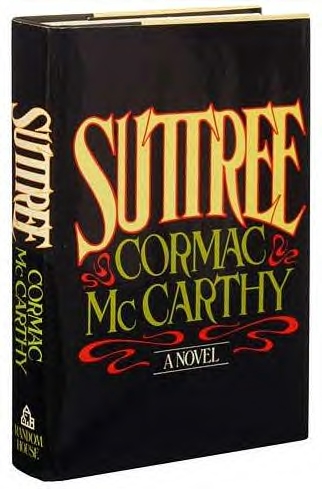
"Curiously, my love of reading finally returned after I picked up Cormac McCarthy's SUTTREE, a book I had already read not long before my first surgery. Now I read it two more times, reentering the same experience, the same occult and visionary prose, the life of SUTTREE so urgently evoked.'
"As rarely before, a book became tactile to me. When Suttree stopped at the bus station for a grilled cheese, I ate it, and the pickle, and drank the black coffee. I began to live again through this desperate man's sad life. In my chilly hospital room late at night, a blanket pulled around me in a wheelchair, a pool of light on the page, I found myself drawn into the story of Suttree with an intensity I hadn't felt from fiction in years.'
"I hungered for that book. I yearned toward it. Suttree was alive. He lived for me. How strange that a novel about such a desperate man could pull me back into living. . ."
Also added to my year's best list is Grant Morrison's SUPERGODS. As I've never been much of a comic book reader, I was going to pass on this social history via comic books. But then I started reading just a page or two and wound up being enthralled by the incisive ideas and the muscular prose. I then backed off, bought the book, and started over at the beginning.
Coincidentally, just in the last week or so, I posted the cover of the original Justice League of America comic on this blog, comparing Don Winslow's Dawn Patrol to the original JLA. I'd never thought about it before, but Grant Morrison points out that the original JLA was much like the lineup of Greek gods. Superman was Zeus; Wonder Woman, Hera; Batman, Hades; the Flash, Hermes; Green Lantern, Apollo; Aquaman, Neptune; and so on.
I'd always considered Batman juvenile or campy at best, but after reading Morrison's detailed mythic and sociological analysis, I've decided to take a look at some of the dark Batman movies, starting with Batman Begins: The Long Halloween.
Also added to the best list: Lisa Randall's new one, Knocking On Heaven's Door. Randall was a guest on two segments of Charlie Rose this last month and I'm glad to have seen her. She talks books at this link.
In her own fresh and widely informative book, she discusses the latest in scientific theories. And she reminds us that it was Murray Gell-Mann, one of Cormac McCarthy's other scientist pals and a winner of the Nobel Prize in physics, who coined the term "quark" to describe the elementary particle, the term inspired by James Joyce's Finnegan's Wake.
Showing posts with label Roger Ebert. Show all posts
Monday, September 26, 2011
Tuesday, February 15, 2011
Tuesday's Transcendental Movie: The Three Burials of Melquiades Estrada
at
The Three Burials of Melquiades Estrada is a highly acclaimed movie that spins trinities in parable and speaks of man's inhumanity to man and of the redemption in forgiveness.
The main trinity evolves with Pete Perkins (Tommy Lee Jones's character) as the spiritual man, Melquiades Estrada as the mental man, and with Mike (Barry Pepper) as the mind-numb border patrolman. They are spirit, mind, and body. Mike is shown as being especially narcissitic, with a masturbating scene and another love-making scene with his beautiful wife which might as well have been masturbation.
Mike mindlessly shoots and kills Melquiades Estrada and buries him in an effort to cover up the crime. The body is discovered and buried for the second time in the town cemetery. The cover-up that occurs mimics a real incident of this nature upon which Guillermo Arriaga wrote his novel (upon which the movie is based). Melquiades Estrada has thus been buried twice.
The plot then is driven by the promise Perkins had made to Melquiades Estrada to see him buried in his own village. Thus the movie becomes a tribute to William Faulkner's As I Lay Dying, which is driven by the same motive--with the same results.
The trinity then evolves. It is present, past, and future; father, son, and holy ghost; for Melquiades Estrada is then the eternal past, shown only in flashback, while Norton and Perkins are the present and future. Perkins, the surrogate father, is teaching Norton, the son, of his ties to the common humanity of things. At one point, he drags Norton through a river, in symbolic ritual of baptism. The closer they get to the third burial, the closer Norton and the ghost of Melquiades Estrada become until they are inseparable.
They never do find Estrada's actual village, but at this point of realization all villages are one and true forgiveness is universal.
Melissa Leo is excellent as a part of the Eternal Feminine trinity in the movie. She followed this with Frozen River and The Fighter, for which she is nominated for an Academy Award. Levon Helm played an excellent supporting part, just amazing. And Dwight Yoakam was surprisingly good.
The movie was well reviewed everywhere, but my favorite review of it was Roger Ebert's, at this link. Very early on, Ebert had pointed out the connection to William Faulkner and the high quality of the movie in general. Famous novelist Stephen King, in Entertainment Weekly, said of the movie, "Tommy Lee Jones channels Cormac McCarthy...and it works."
The Three Burials of Melquiades Estrada is a highly acclaimed movie that spins trinities in parable and speaks of man's inhumanity to man and of the redemption in forgiveness.
The main trinity evolves with Pete Perkins (Tommy Lee Jones's character) as the spiritual man, Melquiades Estrada as the mental man, and with Mike (Barry Pepper) as the mind-numb border patrolman. They are spirit, mind, and body. Mike is shown as being especially narcissitic, with a masturbating scene and another love-making scene with his beautiful wife which might as well have been masturbation.
Mike mindlessly shoots and kills Melquiades Estrada and buries him in an effort to cover up the crime. The body is discovered and buried for the second time in the town cemetery. The cover-up that occurs mimics a real incident of this nature upon which Guillermo Arriaga wrote his novel (upon which the movie is based). Melquiades Estrada has thus been buried twice.
The plot then is driven by the promise Perkins had made to Melquiades Estrada to see him buried in his own village. Thus the movie becomes a tribute to William Faulkner's As I Lay Dying, which is driven by the same motive--with the same results.
The trinity then evolves. It is present, past, and future; father, son, and holy ghost; for Melquiades Estrada is then the eternal past, shown only in flashback, while Norton and Perkins are the present and future. Perkins, the surrogate father, is teaching Norton, the son, of his ties to the common humanity of things. At one point, he drags Norton through a river, in symbolic ritual of baptism. The closer they get to the third burial, the closer Norton and the ghost of Melquiades Estrada become until they are inseparable.
They never do find Estrada's actual village, but at this point of realization all villages are one and true forgiveness is universal.
Melissa Leo is excellent as a part of the Eternal Feminine trinity in the movie. She followed this with Frozen River and The Fighter, for which she is nominated for an Academy Award. Levon Helm played an excellent supporting part, just amazing. And Dwight Yoakam was surprisingly good.
The movie was well reviewed everywhere, but my favorite review of it was Roger Ebert's, at this link. Very early on, Ebert had pointed out the connection to William Faulkner and the high quality of the movie in general. Famous novelist Stephen King, in Entertainment Weekly, said of the movie, "Tommy Lee Jones channels Cormac McCarthy...and it works."
Subscribe to:
Posts (Atom)